AI Weaponization in Global Defense: Is Regulation Too Late?
The use of AI in military actions has started a big global debate. People are worried about the ethics and effects of weaponization. As countries spend a lot on AI for global defense, the need for regulation is becoming more urgent.

Creating and using AI in the military is very challenging. There's a big worry about autonomous weapons making choices that could mean life or death without human control.
Key Takeaways
- The use of AI in global defense is increasing, raising concerns about regulation.
- Nations are investing heavily in AI for military operations.
- The lack of regulation poses significant ethical and operational challenges.
- Autonomous weapons may make decisions without human oversight.
- Global cooperation is necessary to establish effective regulation.
The Current State of AI Weaponization
AI is changing how we defend ourselves. Countries are spending a lot on AI for their armies. This is making war different today.
Defining AI Weapons Systems
AI weapons are military tools that think for themselves. They can make decisions and solve problems like humans do. These tools can be simple or very complex.
Autonomous vs. Semi-Autonomous Systems
Autonomous systems work alone, using machine learning algorithms to learn from new situations. Semi-autonomous systems need people to help, but can do some things by themselves.
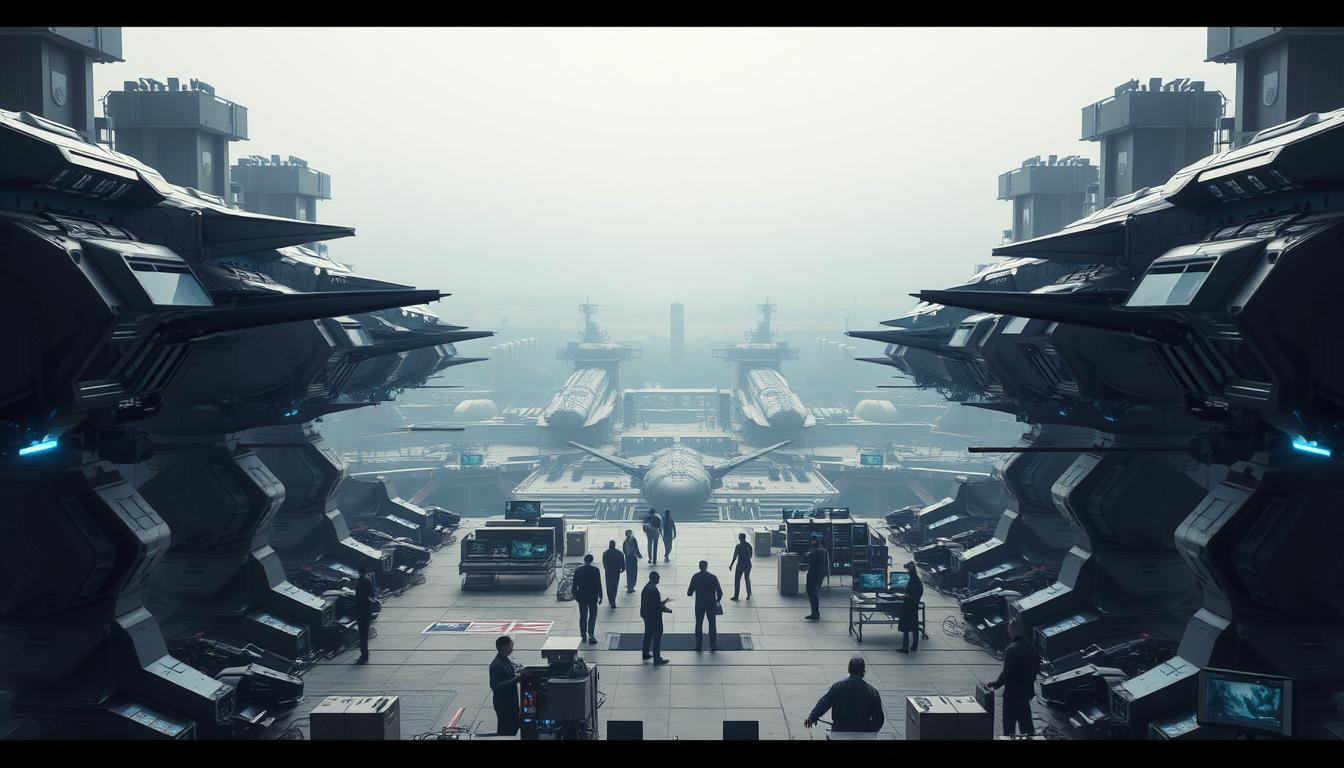
Recent Technological Breakthroughs
New machine learning tech has made AI in the military better. It helps make smarter choices and decisions.
Military Applications of Machine Learning
Machine learning helps in many military ways. It's used for keeping things running, finding information, and making tactical plans. It's great at handling lots of data fast.
Major Global Powers in the AI Arms Race
AI technology is getting better fast. The world's top military powers are racing to use AI for defense. The United States, China, and Russia are leading this race with big investments in research.
United States' AI Defense Initiatives
The United States is leading in AI defense. The Department of Defense (DoD) is key in this effort. They have started many projects to use AI for military needs.
Pentagon's Project Maven and Beyond
Project Maven is a big deal from the Pentagon. It aims to use AI in military operations. The project helps analyze drone footage better, making it easier to find and track targets.
The US is also looking into other AI uses. They want to improve maintenance and logistics with AI.
China's Military AI Development
China is quickly improving its military AI. They are working to use AI in many areas, not just the military.
Integration with "Made in China 2025"
"Made in China 2025" is China's plan to boost manufacturing. It includes AI. This plan helps China's military get better AI technologies.
Russia's Autonomous Weapons Programs
Russia is making advanced drones and unmanned systems. They want to modernize their military with these new tools.
| Country | AI Defense Initiatives | Key Projects |
|---|---|---|
| United States | AI integration into military operations | Project Maven, Predictive Maintenance |
| China | AI for military modernization | "Made in China 2025", AI-enhanced manufacturing |
| Russia | Autonomous weapons development | Advanced drones, Unmanned systems |
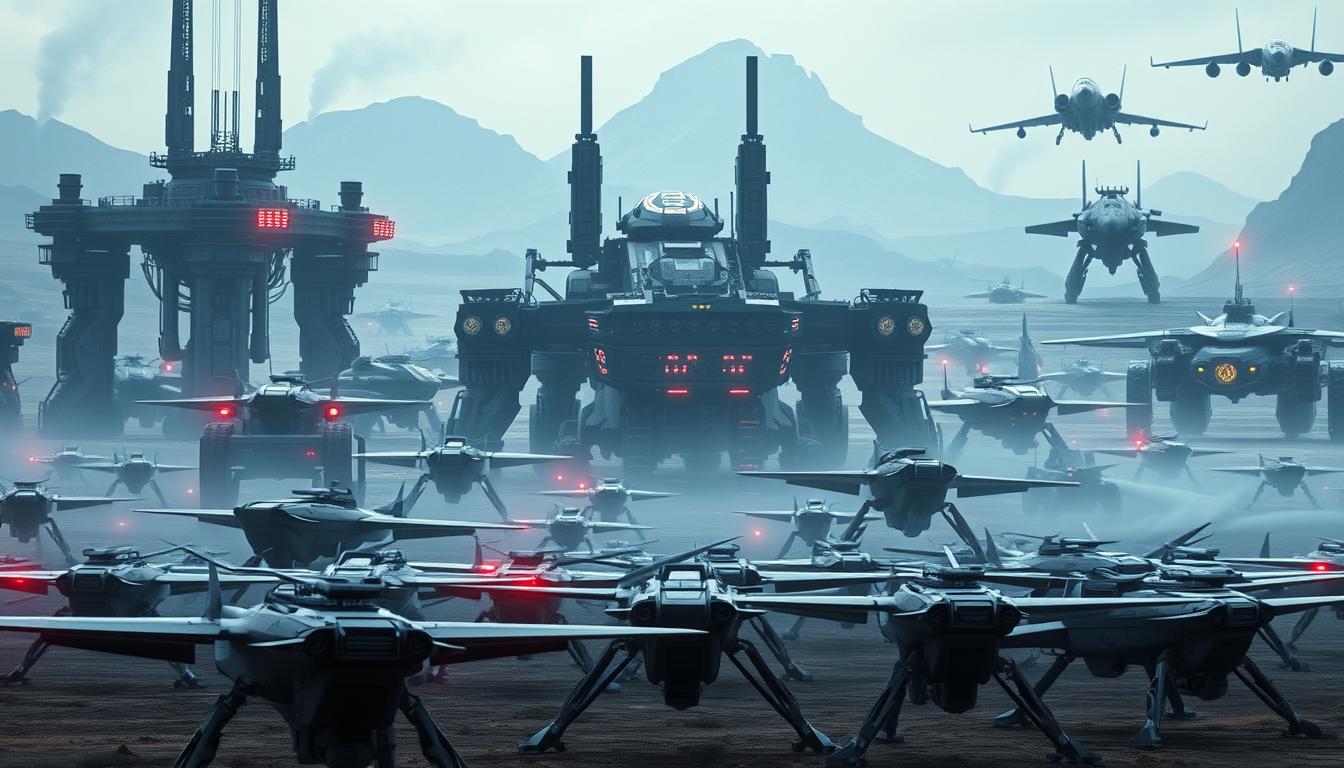
AI Weaponization in Global Defense: Is Regulation Too Late?
AI is getting better fast, making us wonder if we can still regulate it in defense. AI weapons are being made and used quickly. This is making it hard for leaders to keep up.
The Acceleration of Development vs. Regulatory Efforts
The gap between AI tech and rules is growing. Countries are spending a lot on AI for the military. But, making rules is taking too long.
Regulatory efforts are underway, but they're seen as too slow. It's hard to make rules that can keep up with AI's fast growth.
Point of No Return Arguments
Some say we've gone too far with AI weapons. They think we can't stop it now. They believe AI has spread too much to control it.
Technical Proliferation Challenges
AI is hard to control because it can be used by many. This includes governments, groups, and even individuals. It's tough to keep track of who's using AI weapons.
We need a new way to regulate AI. It must cover all parts of AI, from making to using it. We need global teamwork, tech solutions, and a deep understanding of AI's impact.
U.S. Policy Stance on AI Weapons Regulation
AI weaponization has made the U.S. rethink its defense policies. The use of AI in the military raises big questions. These include regulation, ethical use, and the future of war.
Department of Defense Directives
The Department of Defense (DoD) has made several rules for AI in the military. These rules aim to make AI systems reliable and follow U.S. military values.
Congressional Oversight Efforts
Congress is watching how AI is used in the military. They hold hearings and suggest laws to control AI weapons. This is important to keep innovation in check.
Recent Legislative Proposals
New ideas include stopping the use of autonomous weapons. They also want to set rules for AI system development. These ideas show growing worries about AI in war.
| Proposal | Description | Status |
|---|---|---|
| Autonomous Weapons Limitation Act | Proposes to ban the development and use of lethal autonomous weapons. | Pending |
| AI Development Guidelines | Aims to establish ethical standards for AI development in the military. | Under Review |
Existing International Frameworks for AI Weapons Control
International efforts to control AI weapons are growing fast. This is because AI is changing quickly. Countries are working together to handle these changes.
UN Convention on Certain Conventional Weapons
The UN Convention on Certain Conventional Weapons (CCW) is key. It started in 1980. It aims to limit certain weapons that cause too much harm.
Recently, the CCW has talked a lot about AI weapons. Many countries have joined these talks.
Bilateral and Multilateral Agreements
There are also agreements between two countries and many countries. For example, the US and China are talking about AI. The European Union is working on rules for AI in the military.
| Framework | Description | Key Participants |
|---|---|---|
| UN CCW | Restricts certain conventional weapons; focuses on LAWS | Multiple UN member states |
| Bilateral US-China Talks | Diplomatic discussions on AI security and military AI | United States, China |
| EU Common Standards | Establishes standards for military AI development and use | European Union member states |
These steps are important for controlling AI weapons. But, there's still a lot to discuss about their success.
Failed Attempts at Global Regulation
Trying to control AI weapons worldwide has been very hard. Many groups have worked hard, but we still don't have a good plan. This is because it's hard to agree on rules for AI in the military.
Key Summit Outcomes and Limitations
Many important meetings have tried to solve this problem. The United Nations Convention on Certain Conventional Weapons has been a big effort. But, big countries often disagree, which stops progress.
Resistance from Military Powers
Big military countries like the US, China, and Russia don't want to give up their tech. They see AI weapons as a big advantage. They don't want to lose their edge.
This shows how hard it is to agree on AI rules. It's a big problem that needs a lot of work to solve.
Ethical Concerns Surrounding Autonomous Weapons
Autonomous weapons bring up big ethical questions. They make us rethink what war is. We need to look closely at the moral sides of using them.
The Question of Human Control
One big worry is how much humans control these weapons. As they get smarter, they might not need us as much. This makes us wonder who's to blame if things go wrong.
Accountability for AI-Driven Decisions
Who's responsible when AI makes war decisions? It's getting harder to say. We must figure out who's accountable to make sure these weapons are used right.
Proportionality and Discrimination in Warfare
War should only hurt those who need to be hurt. Autonomous weapons must know who's a real target and who's not. They must follow rules to avoid hurting the wrong people.
| Ethical Concern | Description | Implication |
|---|---|---|
| Human Control | Level of human oversight in autonomous systems | Accountability and decision-making |
| Accountability | Responsibility for AI-driven decisions | Establishing clear guidelines |
| Proportionality | Minimizing harm to non-combatants | Adherence to just war theory |
Recent Deployments and Field Tests
AI in the military is now a reality, with many countries using it. This section looks at AI's use in current wars and military drills.
Documented Uses in Current Conflicts
AI is being used in many ongoing wars. The Ukraine-Russia war is a key example. AI is helping in many ways.
Ukraine-Russia War Applications
In the Ukraine-Russia war, AI is used for surveillance, finding targets, and helping with supplies. This shows how much AI is now used in war.
| Conflict | AI Application | Impact |
|---|---|---|
| Ukraine-Russia War | Surveillance, Target Identification | Enhanced situational awareness, Improved targeting accuracy |
| Other Conflicts | Logistical Support, Cyber Warfare | Increased efficiency, Enhanced cybersecurity |
Military Exercises Featuring AI Systems
NATO is leading in using AI in its drills. This shows NATO's commitment to using AI for defense.
NATO's Integration of AI Technologies
NATO's drills now include AI systems. They focus on working together, making decisions, and tactical actions. This shows AI's key role in modern war plans.
AI in the military is changing fast. It's changing how we defend ourselves. As AI gets better, it will play an even bigger part in war.
Private Sector's Role in Military AI Development
The private sector is now key in making AI for the military. This change comes from big tech companies. They have the skills and money to make top AI systems.
Silicon Valley's Defense Contracts
Silicon Valley is a big place for making military AI. Many defense deals go to tech companies. Google, Microsoft, and Amazon are leading in this area.
Google, Microsoft, and Amazon's Military Projects
Google has played a big role in military AI, especially with Project Maven. It worked on AI for drone surveillance. Microsoft got a big deal with the Pentagon, worth $10 billion. Amazon has also worked on military projects, using its cloud and AI skills.
Employee Pushback and Ethical Stances
Big tech companies working on military AI face criticism. Employees have spoken out, causing debates and walkouts. Companies must deal with these issues while keeping their defense contracts.
This conflict will keep shaping the private sector's role in military AI.
Expert Perspectives on Regulation Feasibility
AI is changing the world of defense, making regulation a big issue. Experts have different views on if we can regulate AI in military use.
Defense Analysts' Viewpoints
Defense analysts say it's hard to control AI in weapons because tech changes fast. They think rules need to be able to change with new tech.
AI Ethics Researchers' Positions
AI ethics experts want strict rules to stop AI misuse in war. They say we need to be open about AI making and using it. They also think we should work together worldwide to set rules.
Military Strategists' Assessments
Military planners think we need to really get how AI changes war. They say rules should make sure AI doesn't cause problems by accident.
Important things to think about include:
- Creating clear rules for AI making and using
- Working together globally on AI rules
- Keeping AI use open and accountable
Putting together what experts say shows how hard it is to regulate AI in military use. It shows we need a plan that keeps up with new tech and safety.
Case Studies: AI Weapons Systems in Development
AI weapons systems are getting better fast. Many countries are spending a lot on these new technologies. We will look at some examples of AI weapons being made.
Autonomous Drones and Swarm Technology
Autonomous drones are getting smarter. They can handle tough environments. Swarm technology lets many drones work together. This makes them very powerful.
The US Department of Defense is testing these drones. They want to see how they work in different situations.
AI-Enhanced Missile Systems
AI is making missiles better. They can hit their targets more accurately. They can also avoid being shot down.
Countries like China and Russia are working on these missiles. They use machine learning algorithms to get better at their job.
Cyber Warfare AI Applications
AI is changing cyber warfare. It helps with both attacks and defenses. Cyber warfare AI looks at lots of data to find weak spots.
Big military powers are putting a lot of money into this area. They want to stay ahead in cyber battles.
Conclusion: Balancing Innovation and Security
AI in global defense is growing fast, leading to debates on regulation. Major powers are pushing AI forward, raising the risk of AI misuse. It's key to balance innovation and security to avoid disasters.
AI rules need global cooperation, openness, and a deep understanding of the issues. The United Nations and other global groups must help set AI policies. Governments, industries, and experts must work together to create standards that reduce risks and encourage new ideas.
Finding the right mix of innovation and security is hard but essential. By focusing on responsible AI use, we can lower the risks of AI misuse. This calls for ongoing efforts in AI regulation to ensure its benefits are shared safely.
Comments
Post a Comment